- 91 6369922811
- callmevse@gmail.com
- 3/188 Main road, PLKM, Alangulam Tenkasi - 627415

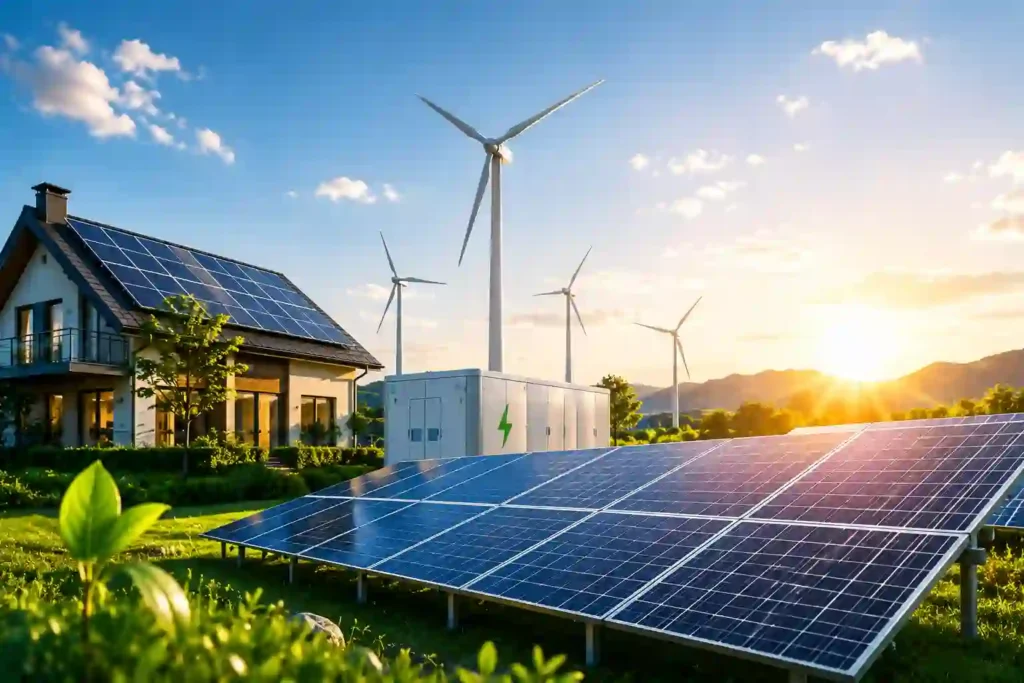
Information About Solar Energy: A Complete Guide
Table of Contents
ToggleSolar energy is a renewable source of power derived from sunlight and used to generate electricity or heat. As electricity costs rise and environmental concerns increase, solar power is becoming an important alternative to conventional energy sources.
Solar technology is used in homes, businesses, industries, farms, and large-scale solar projects. Modern improvements in solar panels, energy storage, and system design have made solar solutions more efficient and accessible.
Government initiatives and incentives have also encouraged wider adoption. This guide provides essential information about solar energy, including its history, working process, types, benefits, applications, limitations, government schemes in India, and future potential.
Basic Information About Solar Energy
Solar energy is the power derived from sunlight and converted into electricity or heat using solar technologies. Since sunlight is naturally replenished, it is considered a renewable energy resource.
Photovoltaic (PV) panels are the most common technology used to generate electricity from sunlight. Their photovoltaic cells absorb solar radiation and convert it into electrical energy. The electricity generated can be used to operate appliances, machinery, lighting systems, pumps, and other equipment.
Unlike conventional power generation that relies on fuels such as coal, oil, or natural gas, solar PV systems do not require fuel combustion while generating electricity. This makes solar power an important option for reducing dependence on conventional energy sources and supporting cleaner electricity generation.
Today, solar technology is used in residential rooftops, commercial buildings, industries, agricultural facilities, solar farms, water-pumping systems, street lighting, and many other applications.
Key Features of Solar Energy
- Renewable and naturally available energy source
- Generates electricity without fuel combustion during operation
- Helps reduce dependence on conventional energy sources
- Can lower long-term electricity expenses
- Requires relatively little routine maintenance
- Solar panels can operate productively for 25 years or longer
- Ideal for residential, commercial, industrial, and agricultural needs
- Can be integrated with battery storage and grid-connected systems
As solar technology continues to develop, it is becoming an increasingly important solution for meeting energy requirements in a more sustainable way.
History of Solar Energy
Humans have relied on the sun for warmth and natural lighting for thousands of years. Modern solar electricity, however, developed through a series of scientific discoveries and technological breakthroughs.
Early Use of Solar Energy
Ancient civilizations understood how building orientation and architecture could make better use of sunlight. The Greeks, Romans, and Egyptians used sunlight for warmth and natural illumination in their buildings.
Although these early practices did not involve electricity generation, they represented some of the earliest examples of deliberately using solar energy.
The Birth of Solar Technology
The scientific foundation of modern solar power emerged in 1839 when French physicist Alexandre Edmond Becquerel discovered the photovoltaic effect. This discovery demonstrated that light could produce an electrical effect in certain materials.
In 1883, inventor Charles Fritts developed an early solar cell using selenium. Although the technology was far less efficient than modern photovoltaic cells, it demonstrated the possibility of directly converting sunlight into electricity.
Growth of Modern Solar Energy
A significant breakthrough came in 1954 when researchers at Bell Laboratories developed a practical silicon solar cell. This achievement helped establish the foundation for modern photovoltaic technology.
During the 1960s, solar cells became increasingly useful for satellites and space missions. Their ability to generate electricity from sunlight without conventional fuel made them particularly valuable in space.
Over the following decades, improvements in manufacturing, materials, and efficiency gradually reduced the cost of solar technology. Solar power subsequently expanded into residential, commercial, industrial, and utility-scale applications.
Solar Energy Today and the Future
Solar energy is now a major component of renewable energy development around the world. Countries are investing in solar generation to diversify their energy mix, improve energy security, and reduce dependence on fossil fuels.
Continued developments in high-efficiency solar modules, batteries, smart energy systems, and grid integration are expected to further increase the usefulness of solar power.
Key Milestones in Solar Energy History
Year | Milestone |
Ancient Times | Civilizations use sunlight for heating, natural lighting, and architectural design. |
1839 | Alexandre Edmond Becquerel discovers the photovoltaic effect. |
1883 | Charles Fritts develops an early selenium-based solar cell. |
1954 | Bell Laboratories develops a practical silicon solar cell. |
1960s | Solar cells become an important energy source for satellites and spacecraft. |
1970s | The energy crisis increases interest in alternative energy and solar research. |
2000s–Present | Solar power expands rapidly across residential, commercial, industrial, and utility-scale projects. |
How Does Solar Energy Work?
Solar electricity is primarily generated using photovoltaic technology. Solar panels contain photovoltaic cells made from semiconductor materials, commonly silicon.
When sunlight reaches a photovoltaic cell, the energy from the sunlight causes electrons within the semiconductor material to move. This movement produces direct current (DC) electricity.
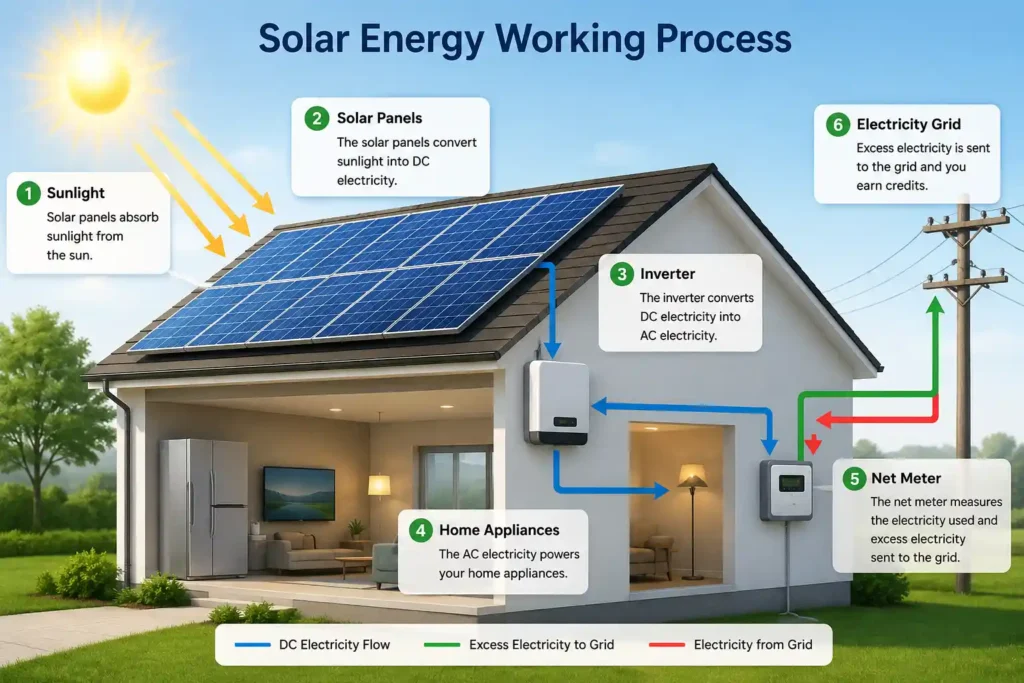
Most household and commercial electrical equipment uses alternating current (AC). Therefore, the DC electricity generated by the solar panels passes through an inverter, which converts it into AC electricity for everyday use.
The electricity can then power appliances, lighting, machinery, pumps, and other electrical equipment. If the system generates more electricity than is immediately required, the surplus can be stored in batteries or exported to the electrical grid, depending on the system configuration and applicable regulations.
The Solar Energy Process
- Solar panels receive sunlight.
- Photovoltaic cells convert sunlight into DC electricity.
- Solar inverters process the DC energy from solar panels and convert it into AC electricity.
- The AC electricity powers household or commercial equipment.
- Surplus electricity can be stored in batteries or supplied to the grid, depending on the system.
This process enables solar systems to convert sunlight into usable electricity without consuming conventional fuel during generation.
Understanding the Types of Solar Energy
Solar technology includes several systems designed for different energy requirements. Some technologies generate electricity directly, while others use sunlight to produce heat.
The three major categories are:
- Photovoltaic (PV) Solar Energy
- Solar Thermal Energy
- Concentrated Solar Power (CSP)
Each technology has a different operating principle and is suited to particular applications.
Photovoltaic (PV) Solar Energy
Photovoltaic solar technology captures sunlight and converts it directly into usable electricity, making it one of the most widely adopted solar energy solutions. It is the most widely recognized form of solar technology and is used in applications ranging from small residential rooftops to large solar farms.
PV cells, generally made using semiconductor materials such as silicon, generate electrical current when exposed to sunlight. The resulting electricity can be used directly, stored in batteries, or supplied to the grid where permitted.
PV systems can be installed on rooftops, commercial properties, open land, industrial facilities, and utility-scale solar projects. Depending on energy requirements and grid availability, systems can be designed as on-grid, off-grid, or hybrid installations.
Advantages of Photovoltaic Solar Energy
- Generates electricity directly from sunlight
- Can reduce dependence on grid electricity
- Helps lower long-term electricity costs
- Requires relatively low routine maintenance
- Suitable for different installation sizes
- Can be combined with battery storage
- Can support net-metering arrangements where applicable
Solar Thermal Energy
Solar thermal technology uses sunlight to produce heat rather than electricity.
Solar collectors absorb solar radiation and transfer the captured heat to water or another heat-transfer fluid. The resulting heat can be used for hot-water production, space heating, industrial processes, and swimming pool heating.
Solar thermal systems are particularly useful in locations with good sunlight and a consistent demand for hot water or heat.
Common Applications
- Residential water heating
- Hotels and hospitals
- Industrial heating
- Swimming pools
- Food-processing facilities
- Commercial hot-water systems
By using solar heat for suitable applications, these systems can reduce the need for conventional electricity or fuel for heating.
Concentrated Solar Power (CSP)
Concentrated Solar Power is primarily used for large-scale electricity generation. Unlike photovoltaic panels, CSP systems use mirrors or lenses to concentrate sunlight onto a receiver.
The concentrated solar energy produces high temperatures, which can generate steam to drive a turbine connected to an electrical generator.
Some CSP facilities also use thermal energy storage. Stored heat can be used to continue electricity generation after direct sunlight is no longer available.
Key Benefits of CSP
- Suitable for utility-scale electricity generation
- Can incorporate thermal energy storage
- Supports large-scale renewable power production
- Can reduce dependence on fossil-fuel-based generation
- Can extend electricity production beyond periods of direct sunlight when storage is available
Key Benefits of Solar Energy
Solar power offers several economic, environmental, and practical advantages. The actual benefits of a solar installation depend on factors such as system size, electricity consumption, location, equipment, and applicable regulations.
- Lower Electricity Bills
- Clean and Renewable Energy
- Low Maintenance Requirements
- Long Operating Life
- Energy Independence
- Government Support
Major Applications of Solar Energy
Solar power can be used across residential, commercial, industrial, and agricultural sectors. Its flexibility makes it suitable for both small-scale and large-scale energy requirements.
Residential Uses
Homeowners can install solar systems to generate electricity and reduce their dependence on conventional grid power.
Common applications include:
- Rooftop solar PV systems
- Solar water heaters
- Solar outdoor lighting
- Home battery backup systems
- Solar-powered appliances
- Electric vehicle charging
A suitable residential solar system can help households make greater use of renewable energy and manage long-term electricity expenses.
Commercial and Industrial Uses
Businesses and industries often have significant electricity requirements. Solar installations can help them generate part of their electricity requirements while supporting sustainability objectives.
Common applications include:
- Office buildings
- Shopping malls
- Hospitals
- Hotels
- Educational institutions
- Warehouses
- Manufacturing facilities
For businesses, solar energy can be part of a broader strategy for managing energy expenses and reducing the environmental impact of operations.
Solar Energy in Agriculture
Solar technology has several applications in agriculture, particularly for water pumping and electricity supply in locations where reliable power is important.
Common agricultural applications include:
- Solar water pumps
- Solar-powered irrigation
- Solar fencing
- Greenhouse applications
- Livestock water systems
- Farm lighting
Solar-powered equipment can help farmers reduce their dependence on conventional electricity or diesel for suitable agricultural operations.
Challenges and Limitations of Solar Energy
Despite its advantages, solar energy also has limitations that should be considered before investing in a system.
- Initial Installation Cost
- Weather Dependency
- Space Requirements
- Energy Storage Costs
- Performance Variation
The Truth About Solar Energy: Myths vs. Facts
Misconceptions about solar power can sometimes prevent people from exploring renewable-energy options. Here are some common myths and the facts behind them.
Myth | Fact |
Solar panels only work in very hot weather. | Solar panels require sunlight rather than high temperatures and can generate electricity in different climates. |
Solar energy is always too expensive. | Solar technology has become more affordable over time, although costs vary according to system size, equipment, and location. |
Solar panels need constant maintenance. | Most PV systems require routine cleaning, inspections, and performance monitoring rather than constant maintenance. |
Solar panels stop working on cloudy days. | Panels can still generate electricity in cloudy conditions, although their output is generally reduced. |
Solar systems are only suitable for large buildings. | Solar systems can be designed for homes, businesses, farms, institutions, and industrial facilities of different sizes. |
Government Solar Schemes in India
The Government of India has introduced several programs and initiatives to encourage solar-energy adoption. Because scheme guidelines, eligibility requirements, subsidies, and implementation procedures can change, consumers should verify the latest information through official government sources before making an investment.
Why Homeowners Should Check Government Solar Schemes
Before installing a rooftop solar system, homeowners should review the latest central and state-level policies applicable to their location.
Programs such as PM Surya Ghar: Muft Bijli Yojana, along with applicable net-metering provisions and state incentives, may affect the overall investment and potential savings.
Before proceeding, homeowners should verify:
- Current subsidy eligibility
- Applicable system capacity
- Approved vendors
- Net-metering requirements
- Required documentation
- Installation conditions
- Current government guidelines
Because policies can change, it is important to rely on current information from official government departments and electricity distribution companies.
Solar Energy: Driving the Future of Renewable Power
Solar energy is expected to remain an important part of the transition toward cleaner electricity. Growing energy demand, environmental concerns, and technological improvements are encouraging households, businesses, industries, and governments to explore renewable power solutions.
Advancements in solar panel efficiency, battery storage, smart energy management, and monitoring systems are making solar installations increasingly flexible and practical.
Residential rooftop systems can help households generate electricity locally, while commercial and industrial projects can use solar power to support energy-management and sustainability objectives. At a larger scale, utility solar projects can contribute to national electricity generation.
As energy technologies continue to evolve, the combination of solar generation, energy storage, smart controls, and improved grid infrastructure could further expand the role of solar power in the future.
Ready to Switch to Solar Energy?
A professional solar installer can assess these factors, recommend a suitable system configuration, and assist with installation, commissioning, maintenance, and after-sales support.
Want to explore solar energy for your home or business? Contact veyyon solar for free consultation and learn how a professionally designed solar system can help you make better use of renewable energy.
Related Articles : solar-energy-complete-guide
What is solar energy?
Solar energy is energy obtained from sunlight and converted into electricity or heat using technologies such as photovoltaic panels and solar thermal systems.
How do solar panels generate electricity?
Solar panels contain photovoltaic cells that absorb sunlight and generate DC electricity. A solar inverter converts the DC electricity into AC electricity for use by most household and commercial equipment.
What are the main types of solar energy?
The three major categories are photovoltaic (PV) solar energy, solar thermal energy, and concentrated solar power (CSP). Each technology has different applications and operating principles.
What are the main benefits of solar energy?
Solar energy can help reduce dependence on conventional electricity, lower long-term energy expenses, provide renewable power, and reduce emissions associated with fuel-based electricity generation.
Can solar panels work during cloudy weather?
Yes. Solar panels can continue generating electricity under cloudy conditions, although their power output is generally lower than under strong sunlight.